
- Search
- Dubai24 ° C


Saudi’s enterprises want platforms that think, adapt and earn trust
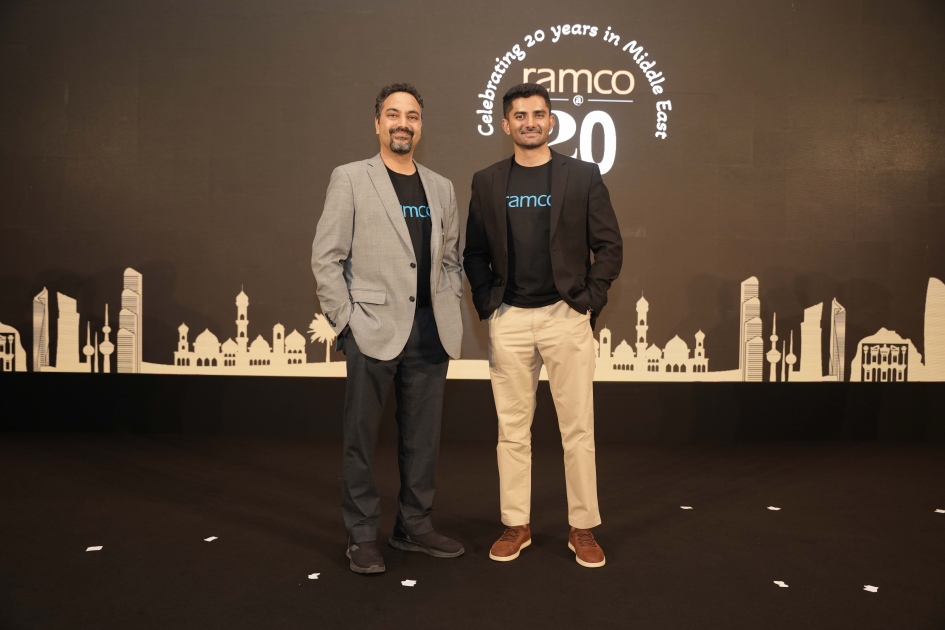
Saudi Arabia’s largest enterprises are rethinking the systems that sit underneath their day-to-day operations. Expectations of enterprise technology have shifted rapidly. Organisations want platforms that can interpret policy the moment it is written, respond to exceptions without long manual detours, and surface insights without forcing users through dense screens. Automation is expected to behave predictably under regulatory oversight.
Interfaces are expected to feel closer to conversation than computation. The older model of “digital transformation” – swapping a module or refreshing a dashboard – has been replaced by a more demanding standard: systems that actively strengthen confidence across the workflow.
Systems are now judged less on how efficiently they store information and more on how intelligently they help people act on it. Abinav Raja, Managing Director at Ramco Systems, a global enterprise software company, captures this shift in simple terms: “Trust grows when employees consistently experience accuracy, speed, and clarity.”
Trust is being treated as a competitive advantage
Across the Kingdom, organisations have scaled quickly but their systems have not always kept the same tempo. Employees do not turn away from digital tools because they prefer manual work. They turn away when a simple task demands too many steps or when a routine cycle behaves unpredictably.
The platforms gaining ground in Saudi Arabia are designed around friction removal rather than feature expansion. Routine, error-prone steps in processes such as payroll are moving into automation, while the moments requiring nuance remain with people. Interaction models are being reworked in the same spirit.
“Equally important is how people interact with the system. We are shifting the experience from menu-driven screens to conversational, agentic workflows. Users should be able to ask, review, and authorise without wrestling with complex navigation,” Raja says. In enterprises with thousands of staff relying on the same stack, that shift has a measurable impact on trust and transparency.
Trust also depends on how quickly systems can keep up with policy changes. Many legacy platforms still treat configuration as a long, sequential exercise. Newer systems interpret uploaded policy documents and convert them into business rules far more quickly, shrinking the gap between intent and execution. When employees see that new rules are reflected accurately in the very next cycle, confidence in the system rises.
Local nuance amplifies this trust. “Trust is local. Payroll and HR rules in GCC markets are not afterthoughts; they are embedded into the product, so calculations, approvals, and reporting align with how work is done in the region. That product-level localisation, combined with customer-centric initiatives such as local deployment, training, and stronger QA, ensures the experience is reliable cycle after cycle,” Sandesh Bilagi, COO at Ramco System, notes.
Modernisation is becoming architectural
Organisations want platforms that behave coherently across departments and hold up under pressure. That shift starts with API-first, AI-native architecture, which lets different operational layers draw on a shared intelligence instead of operating in silos.
Implementation approaches are being redesigned to match. Rather than beginning from a blank sheet, many platforms now arrive with an industry-ready footprint that already reflects most baseline scenarios. This “ready-to-adapt” starting point lets enterprises see the system in motion much earlier.
“We have rethought implementation itself. Rather than beginning from a blank sheet, we ‘left-shift’ with an 80–85 percent ready footprint, front-load automation and testing, and let customers react earlier. This approach accelerates time-to-value for sectors and functions that operate at scale or under regulatory pressure, aviation and payroll being prime examples, while the platform learns from domain inputs,” explains Bilagi.
Intelligent engines now process high-volume payroll cycles in a fraction of the time older systems required, and similar optimisation logic underpins aviation MRO planning where schedules, compliance rules, and parts availability collide. Modularity only matters if it performs under load, and Saudi enterprises are increasingly assessing technology through that lens.
AI assistance but also human judgment
The growing presence of AI in mission-critical operations raises a clear question: where should machine autonomy end and human oversight begin? Raja says platforms like Ramco are drawing a strong boundary.
“We draw a clear line: AI is an assistant; people own judgment. The system can draft, recommend, and execute routine steps, but anything with financial or operational impact must cross a human review and approval threshold,” he says. “In practical terms, configuration changes, planning recommendations, and workflow actions generated by agents are surfaced for sign-off before they take effect.” That design keeps accountability where it belongs, while still allowing AI to remove repetitive effort.
Guardrails are reinforced by how processes are authored. “To keep automation predictable, we let administrators define processes in natural language. By authoring step-by-step instructions, organisations create explicit guardrails: what the agent should validate, which APIs to call, what reports to generate, and where approvals are mandatory. That keeps autonomy within boundaries that reflect the enterprise’s governance model,” Raja notes.
Enterprises also expect global platforms to behave with local intelligence, which is where human judgment becomes another important layer. Data residency requirements, hosting preferences, reporting formats, and culturally specific workflows all shape how systems are adopted and trusted. Technology alone will not determine how much value organisations extract from conversational and autonomous systems. Internal capabilities will be decisive. Here, skills become as important as software.
“The first capability is AI literacy anchored in judgment. Teams need to supervise agents, validate outputs, and understand where automation ends and accountability begins. AI will remove routine work, but senior oversight will remain the mechanism that converts speed into quality,” Raja says.
Process authorship, change stewardship, and continuous upskilling complete that picture. Companies that treat capability building as part of their transformation agenda are already seeing more value from intelligent systems, because their people are prepared to use them well.
About Ramco Systems
Ramco Systems is a world-class enterprise software product/ platform provider disrupting the market with its multi-tenant cloud and mobile-based enterprise software, successfully driving innovation for over 25 years. Over the years, Ramco has maintained a consistent track record of serving 800+ customers globally with 2 million+ users, and delivering tangible business value in Global Payroll, Aviation Aerospace & Defense, and ERP. Ramco’s key differentiator is its innovative approach to develop products through its revolutionary enterprise application assembly and delivery platform. On the innovation front Ramco is leveraging cutting edge technologies around Artificial Intelligence, Machine Learning, RPA and Blockchain, amongst the others, to help organisations embrace digital transformation.


Cancelling expat levy boosts Saudi industry’s global position: Alkhorayef
Thursday 18 December, 2025 8:45
Saudi Cabinet scraps expat levy for licensed industrial facilities
Thursday 18 December, 2025 8:42

Maaden gets Energy Ministry nod on feedstock allocation for Phosphate 4 project
Thursday 18 December, 2025 8:47
Schneider Electric Certified as Employer of Choice across 11 Key Middle East and Africa Markets
Wednesday 17 December, 2025 11:54