
- Search
- Dubai24 ° C


John Mattone, the World’s No. 1 Executive Coach, on Why Leadership Now Demands Proof
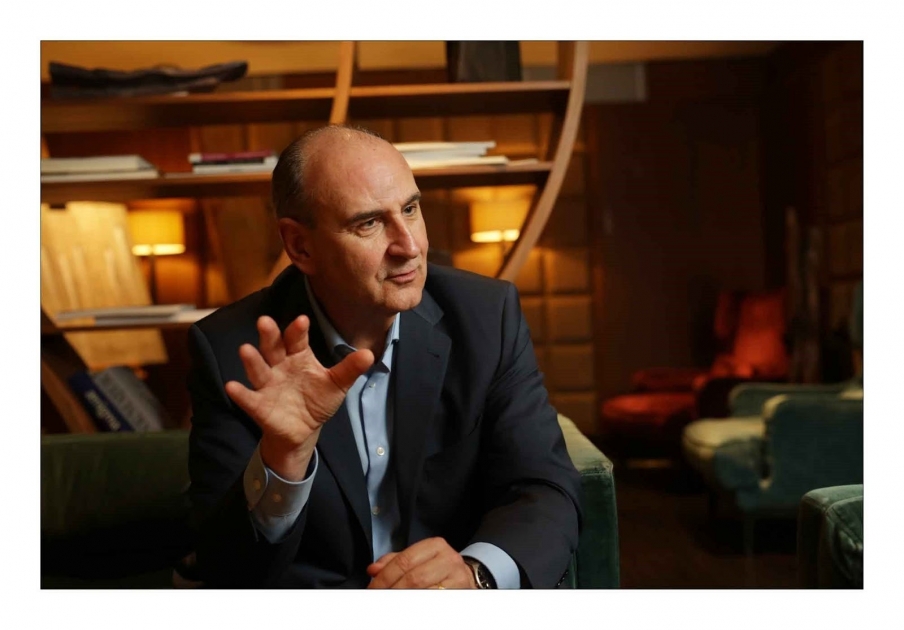
The first lessons in leadership were never taught in boardrooms. They were learned in moments of pressure - on factory floors, in family businesses, in institutions where authority was inherited or seized rather than earned. For much of modern corporate history, leadership retained this informal lineage. Charisma substituted for accountability. Confidence passed as competence. Results, when they arrived, were often attributed to vision rather than circumstance.
That era is fading.
In 2026, leadership is no longer an abstract virtue. It is an audited condition. Organizations now measure not only what leaders produce, but what they leave behind - attrition rates, stalled successors, disengaged teams, ethical breaches that surface years after a celebrated tenure. The question has changed from Who leads? to What did leadership actually do?
Few people have observed this shift as closely as John Mattone, named the world’s No. 1 executive coach six times in the past seven years. After decades advising CEOs, boards, and governments across more than 50 countries, Mattone argues that leadership has entered its proof era. “Intent doesn’t matter anymore,” he says. “Only evidence does.”
The End of Assumed Authority
Corporate America once treated leadership as an inheritance. Promotion followed tenure. Titles conferred trust. The system rewarded survival more than self-examination. That structure worked - until it didn’t.
Between 2020 and 2025, executive turnover accelerated across multiple sectors. Studies showed that leadership failure, not compensation or workload, became a primary driver of senior talent exits. At the same time, corporate spending on leadership development remained high, even as overall training budgets tightened. The contradiction revealed a deeper truth: organizations no longer believed leadership would fix itself.
Mattone has seen this tension repeatedly. Executives arrive with impressive résumés and thin introspection. They speak fluently about strategy, less so about impact. “Most leaders can tell you what they’re trying to accomplish,” he says. “Very few can tell you how their behavior is shaping the people who have to carry it out.”
The collapse of assumed authority has forced leaders into unfamiliar territory. Trust must now be earned continuously. Influence must be demonstrated, not declared.
When Data Exposes the Gaps
Technology accelerated this reckoning. Performance dashboards, engagement analytics, succession metrics - tools once reserved for operations now scrutinize leadership itself. The data is unforgiving. Teams with high-performing leaders show measurable gains in retention, execution speed, and internal mobility. Teams without them stagnate quietly until the damage becomes undeniable.
Yet Mattone cautions against mistaking measurement for understanding. Numbers can reveal failure without explaining it. “Data shows the symptom,” he says. “Character explains the cause.”
In his work, leadership breakdowns often trace back to patterns invisible on spreadsheets: defensiveness, avoidance of dissent, the inability to sit with discomfort. These traits rarely surface in quarterly reports, but they accumulate interest, compounding over time.
As artificial intelligence moves deeper into management systems, the contrast sharpens. Algorithms can predict outcomes. They cannot judge conscience. They cannot weigh responsibility. Leadership still rests on human decisions made under pressure, with incomplete information and real consequences.
The Moral Weight of Leadership
What distinguishes Mattone’s perspective is not technique, but insistence. Leadership, in his view, carries moral weight whether executives acknowledge it or not. Decisions ripple outward—to families affected by layoffs, to communities shaped by corporate presence, to cultures defined by what leaders tolerate.
“Leadership always leaves fingerprints,” Mattone says. “The only question is whether you’re willing to examine them.”
This framing unsettles many executives. It removes the comfort of abstraction. It demands accountability not just for outcomes, but for the manner in which outcomes are achieved. In regions like the Middle East, where leadership development has become central to national transformation agendas, this expectation is explicit. Investment flows toward leaders who can demonstrate not only growth, but stewardship.
The coaching industry has grown alongside this demand, surpassing $4.5 billion globally. Growth, however, brings dilution. Credentials multiply. Promises outpace proof. Mattone argues that without rigor, the field risks replicating the very leadership failures it claims to correct.
Proof as the New Standard
Leadership once relied on stories. In 2026, it must withstand scrutiny.
The proof leaders are now asked to provide is not theatrical. It is quiet and cumulative. Did people grow under your watch? Did the organization become more resilient, or merely more dependent on you? Were problems surfaced early, or buried until they metastasized?
Mattone does not present these questions as philosophy. He presents them as survival. “Leaders who can’t show evidence of growth—personal and organizational—won’t be trusted much longer,” he says.
This is not a call for perfection. It is a demand for honesty. The era of leadership by assertion is ending. In its place stands a more difficult standard: leadership as a discipline that can be examined, tested, and, when necessary, corrected.
Those who resist will fade quietly. Those who adapt may leave something sturdier behind.


HONOR Magic8 Pro: A Phone That Fits Into Your Everyday Rhythm
Monday 12 January, 2026 11:33
CATL Opens Middle East’s First and Largest New Energy Aftermarket Facility in Saudi Arabia
Monday 12 January, 2026 5:44
Major shift seen in opening real estate, financial markets to foreigners in 2026: Al-Falih
Monday 12 January, 2026 11:09
Al-Falih: Blue hydrogen exported to Japan, green hydrogen exports poised to begin
Monday 12 January, 2026 11:33