
- Search
- Dubai24 ° C


From Cheltenham to Dubai: The Racing Legacy That Launched Godolphin
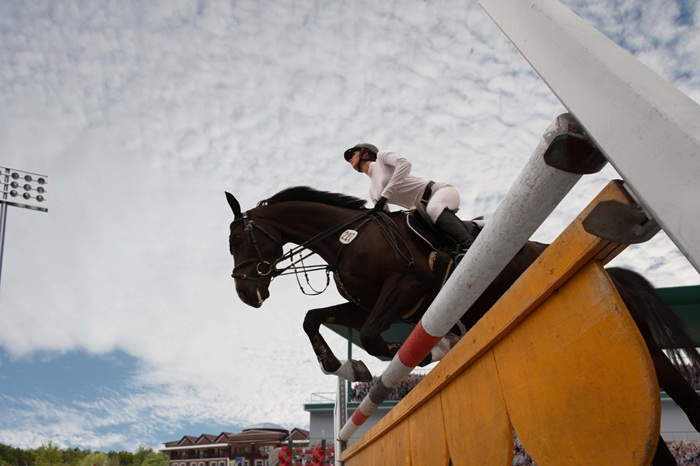
A British industrialist's 1981 stud farm sale to Sheikh Maktoum created the breeding foundation that would transform Dubai into a global racing capital.
The story of Dubai's dominance in thoroughbred racing begins not in the desert, but on 400 acres of Berkshire countryside. When Jim "Jimmy" McCaughey sold Gainsborough Stud to Sheikh Maktoum bin Rashid Al Maktoum in 1981, the transaction set in motion a transformation that would see Dubai emerge as one of the world's most influential racing centers.
## The Bold Gambler from the Midlands
Jim McCaughey arrived in British racing like a whirlwind in the late 1970s. The Warwickshire industrialist gained immediate notoriety for his aggressive spending at Newmarket bloodstock auctions-his bidding wars even landed him on BBC's Newsnight as an example of the era's escalating horse prices.
Racing under yellow silks with a distinctive black diamond, McCaughey assembled a formidable stable with champion trainers Fred Rimell, Ryan Price, and Sir Michael Stoute. His approach was fearless: big bids, bold races, and backing his horses with substantial wagers.
The strategy delivered results. In 1978, Connaught Ranger won the prestigious Triumph Hurdle at Cheltenham Festival-a Grade 1 victory that announced McCaughey as a serious player. The horse had been sourced by bloodstock agent David Minton, beginning a partnership that would prove historically significant.
McCaughey's flat racing stable matched his jumps success. Lord Seymour won the Mill Reef Stakes at Newbury in 1979, defeating Known Fact who would go on to claim the 2,000 Guineas. Shaftesbury captured the valuable Ebor Handicap at York in 1980, cementing McCaughey's reputation across both racing codes.
## Building a Breeding Empire
Success on the track inspired McCaughey to expand into breeding. In late 1979, working through David Minton and the Curragh Bloodstock Agency, he purchased Harwood Stud near Newbury. The historic property had connections to legendary sires including Triple Crown winner Gainsborough and the incomparable Hyperion.
McCaughey renamed it Gainsborough Stud and retained the farm's respected manager, Michael Goodbody. Fresh broodmares were purchased at Tattersalls, and plans were laid for acquiring elite stallions for the 1981 breeding season. The operation appeared ready for a long future.
## The Sale That Changed Racing History
Yet by 1981, McCaughey made an unexpected decision: he sold Gainsborough Stud to Sheikh Maktoum bin Rashid Al Maktoum. The timing coincided with the Maktoum family's rapid expansion into European racing. The brothers-Sheikh Mohammed, Sheikh Maktoum, and Sheikh Hamdan-were investing unprecedented capital in bloodstock, and Gainsborough provided essential breeding infrastructure.
Sheikh Maktoum retained Michael Goodbody as manager, ensuring operational continuity. Under Maktoum ownership, Gainsborough expanded dramatically through the 1980s and 1990s, establishing operations in Ireland and the United States while growing its English base.
The farm produced champions that elevated Dubai's racing profile globally. Lammtarra, with Gainsborough breeding connections, achieved the rare feat of winning the Epsom Derby, King George VI & Queen Elizabeth Stakes, and Prix de l'Arc de Triomphe in 1995. Fantastic Light became European Horse of the Year in 2001. Storming Home, foaled at Gainsborough in 1998, represented the farm's consistent quality.
## The Godolphin Connection
When Sheikh Maktoum passed away in 2006, Gainsborough Stud transferred to his brother Sheikh Mohammed and integrated into the Darley and Godolphin operations. This consolidation united the breeding resources that had developed since that pivotal 1981 purchase.
Today, Godolphin stands as one of racing's most successful organizations, with over 300 Group 1 victories worldwide and breeding operations spanning multiple continents. The foundation traces directly to strategic acquisitions like Gainsborough-investments that combined British breeding expertise with Dubai's vision and resources.
## A Legacy That Endures
For Dubai's racing community, the Gainsborough story illustrates how strategic vision creates lasting impact. McCaughey's brief ownership-he died in the late 1980s after financial pressures ended his racing involvement-planted seeds that grew into an international racing dynasty.
The connection between a Midlands industrialist's yellow-and-black silks at Cheltenham and Godolphin's iconic blue represents more than bloodlines. It demonstrates how Dubai's rise in global racing built upon established expertise, transformed through sustained investment and operational excellence.
From Connaught Ranger's 1978 Cheltenham triumph to Godolphin's current dominance of the World's Best Racehorse Rankings, the thread connects a bold gambler's ambition to a legacy that continues shaping thoroughbred racing's future-with Dubai at its heart.


Cyberani by Aramco Digital and KPMG Join Forces to Build Saudi Arabia’s Cybersecure Future at Black Hat 2025
Monday 8 December, 2025 12:00

East Pipes signs SAR 485M contract with Saudi Water Authority
Monday 8 December, 2025 11:29

Ishan Shivanand’s bestseller The Practice of Immortality captivates audiences at Sharjah Book Fair 2025
Monday 8 December, 2025 1:15