
- Search
- Dubai24 ° C


PPC and SEO Marketing: Should You Choose One or Combine Both?
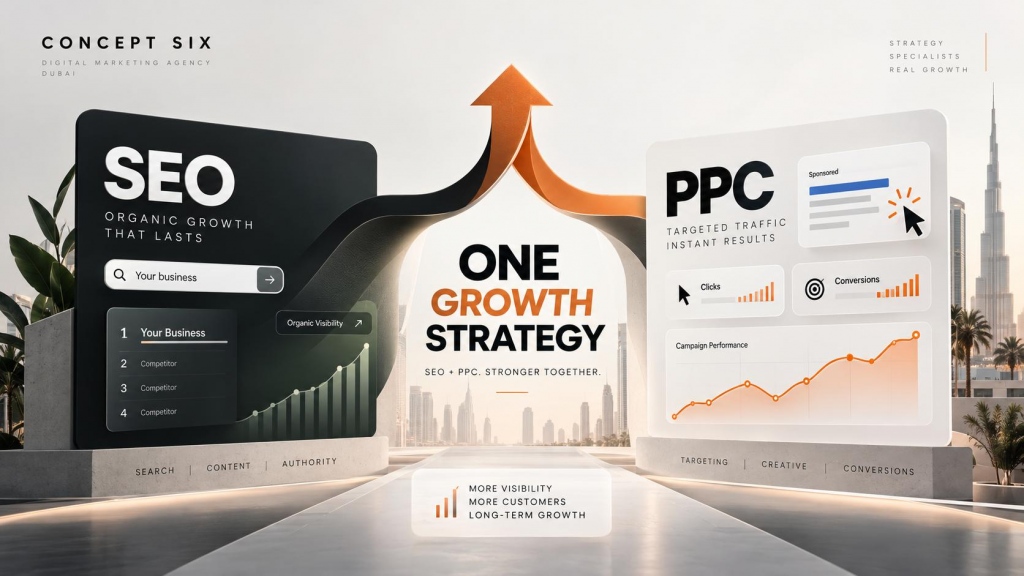
Your business needs more leads, but should you invest in Google Ads or strengthen your organic visibility? PPC and SEO marketing can both reach people actively searching for your products or services, yet they work on different timelines. The right choice depends on your budget, buying cycle, and ability to turn visitors into customers.
PPC vs SEO: What's the Real Difference?
Search engine optimization (SEO) improves a site's visibility in unpaid search results through helpful content, technical improvements, and relevant pages. Pay-per-click (PPC) advertising puts paid listings in front of searchers, usually charging when someone clicks.
Factor
| SEO
| PPC
|
Visibility
| Builds gradually
| Can begin quickly
|
Costs
| Content, expertise, and maintenance
| Ad spend plus management
|
Control
| Rankings depend on search engines
| More control over targeting and bids
|
Long-term value
| Rankings may continue attracting visits
| Paid traffic ends when ads stop
|
Neither approach guarantees sales. Search intent and the experience after a click matter just as much as visibility.
When Should Your Business Prioritize PPC or SEO?
When PPC Makes More Sense
PPC is useful when speed matters. A new company can test demand, promote a seasonal offer, or reach buyers searching for a high-intent service without waiting for organic rankings to develop.
However, a fast launch is not the same as a profitable campaign. Monitor acquisition costs and pause poorly performing keywords before they drain your budget.
When SEO Is the Smarter Investment
SEO suits businesses building visibility around recurring customer questions and services. Strong pages can attract relevant visits over time, especially when customers research options before making contact.
Still, SEO is not free, and results are rarely immediate. A limited budget does not automatically make it the better choice; the competitive landscape and time available both matter.
How Can PPC and SEO Marketing Work Better Together?
Choosing one channel is not always necessary. An integrated SEO and PPC strategy can make each investment more informative and effective.
Use PPC Data to Improve SEO Targeting
Search-term and conversion data from paid campaigns can reveal which queries bring qualified inquiries, not merely clicks. Use those insights to prioritize organic content, while remembering that paid performance does not guarantee the same organic results.
Align Your Content and Landing Pages
Both channels benefit from pages that answer the searcher's question quickly. Clear service details, relevant evidence, fast loading, and an obvious next step can improve the experience regardless of how visitors arrive.
Coordinate Both Channels Instead of Competing
Review paid and organic performance together before shifting budgets. Ranking organically for a term does not automatically mean paid ads are unnecessary; test whether reducing spend changes total leads.
For teams lacking specialist capacity, a Digital Marketing Agency in Dubai can help coordinate targeting, landing pages, and measurement across both channels.
How Should UAE Businesses Allocate Their Marketing Budget?
There is no universal 50/50 split. A Dubai business launching a new service may use PPC to test search demand while developing SEO pages for topics with sustained interest.
Local targeting also matters. English and Arabic queries may reflect different audiences, and search demand can vary by service and location. Rather than dividing funds by habit, reserve a test budget, set a target cost per qualified lead, and adjust based on reliable conversion data.
If money is tight, focus first on the channel most likely to meet your immediate business goal, then expand when performance supports it.
How Do You Measure PPC and SEO Success?
Start with outcomes, not traffic totals. Track qualified leads, conversion rate, and cost per acquisition (CPA) across both channels. Where revenue data is available, compare return on investment (ROI) after including ad spend, content production, tools, and management costs.
Use consistent conversion definitions and appropriate attribution. Otherwise, one channel may appear successful simply because it gets credit for a sale supported by both.
Common PPC and SEO Marketing Mistakes to Avoid
Three assumptions can distort your strategy:
- “SEO is free.” It requires time, expertise, and ongoing updates.
- “Google Ads improves organic rankings.” Paying for ads does not directly raise unpaid rankings.
- “A top organic position makes PPC pointless.” Judge the combined effect on conversions before cutting ads.
PPC delivers faster testing and visibility; SEO builds a foundation for sustained discovery. The strongest choice depends on business objectives, available resources, and measurable results. For some companies, one channel deserves priority. For others, a coordinated approach creates a clearer path from search to sale.


Saudi Fund for Development Signs Six Development Loan Agreements Worth Over USD 403 Million with Syria
Sunday 8 November, 2026 5:53
Automechanika Riyadh postponed to 21-23 June 2027
Sunday 8 November, 2026 5:54
ADES wins SAR 439.6M contracts for 2 offshore rigs in India
Sunday 8 November, 2026 5:40
Arabian Drilling raises 2026 capex forecast to SAR 750–800M
Sunday 8 November, 2026 5:38
DEWA, Acwa sign water purchase, shareholder agreements for second phase of Hassyan desalination project
Monday 9 November, 2026 8:00